How to Build Your Creative Vision?
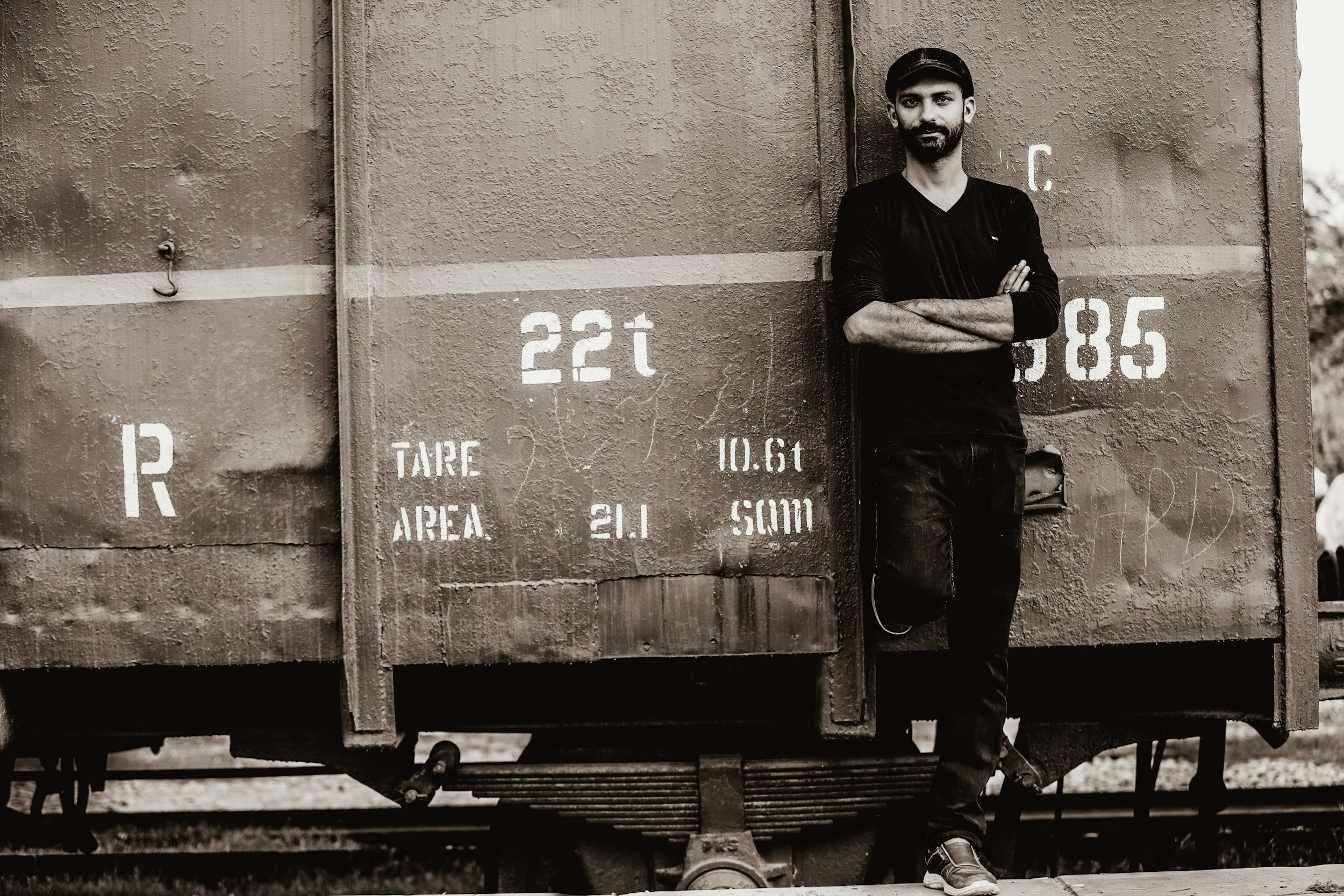
Not Just a Portfolio
Introduction
A strong portfolio shows what you can produce.
A creative vision explains why you produce it.
In a world where technical perfection is expected, vision is the true differentiator. Cameras have become smarter, software has become easier, and access to education has never been higher. Yet many photographers struggle to define their identity.
This article is about moving beyond technical competence and developing a photographic voice that is intentional, recognisable, and enduring.
Why Technical Skill Alone Is Not Enough

Technical skill is the foundation, not the destination.
Sharp focus, correct exposure, and clean colour are now baseline expectations. They no longer separate photographers. What separates them is intention.
If your images could belong to anyone, they belong to no one.
Creative vision is what allows a photographer to:
• Create consistency across projects
• Be recognisable without a watermark
• Attract clients who value perspective, not just execution
Finding Your Voice as a Photographer

Your photographic voice is not a preset, a genre, or a trend.
It is the sum of:
• What you notice
• What you choose to exclude
• What you repeatedly return to
To begin defining your voice, ask yourself:
• What moments do I instinctively wait for
• What emotions appear most often in my work
• Do I prefer control or spontaneity
• Do my images feel quiet or confrontational
• What do I photograph when no one is paying me
Your answers reveal patterns. Patterns become intention. Intention becomes vision.
Mood Boards and Visual Storytelling
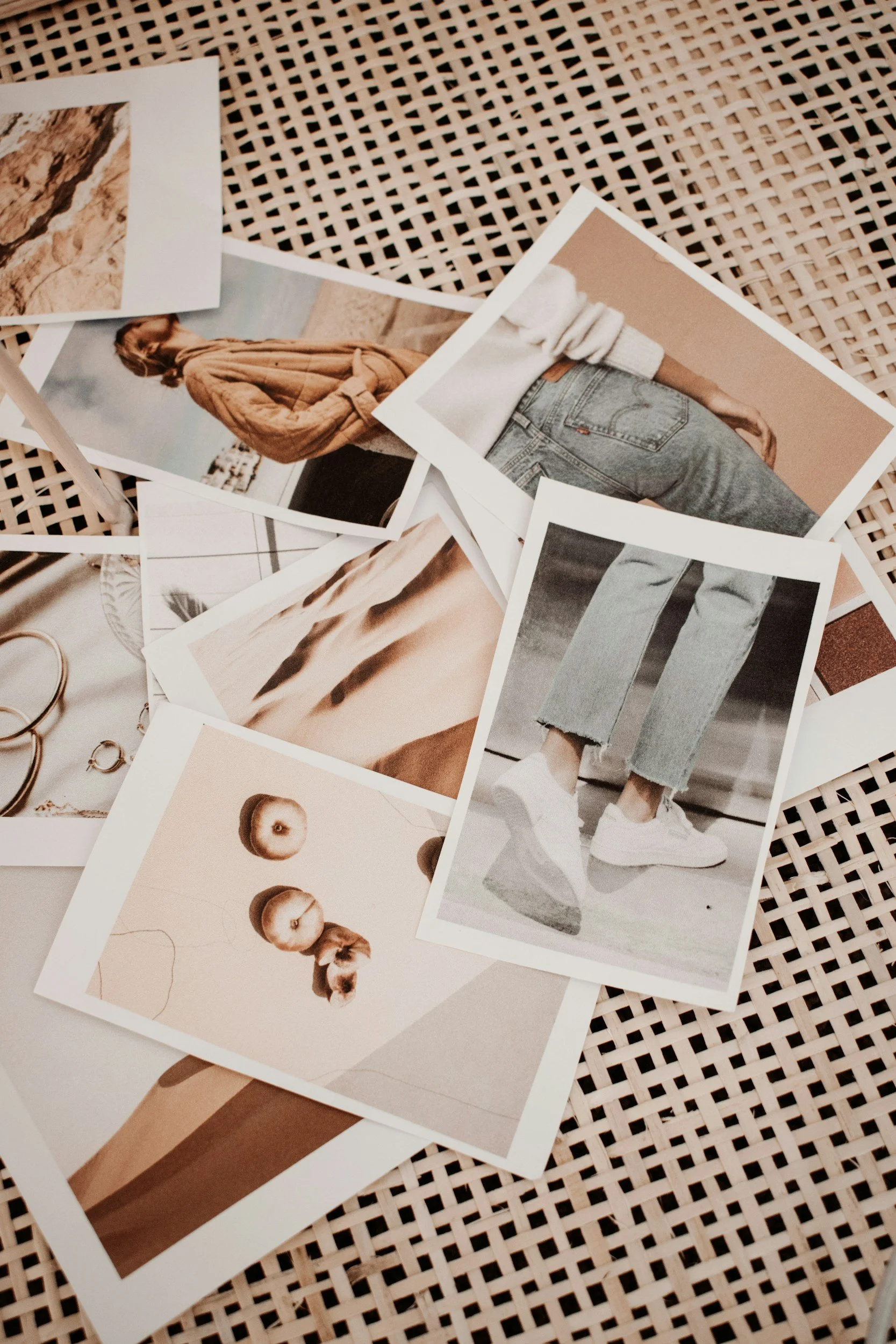
Mood boards are not about copying images.
They are about clarifying feeling.
A strong mood board focuses on:
• Atmosphere
• Light
• Emotion
• Narrative tension
Limit yourself to 10 to 20 images. Pull from cinema, fashion editorials, paintings, architecture, and still frames. Avoid photographers you admire directly. The goal is influence, not imitation.
Mood boards help you articulate what words often cannot.
Balancing Trends and Authentic Style
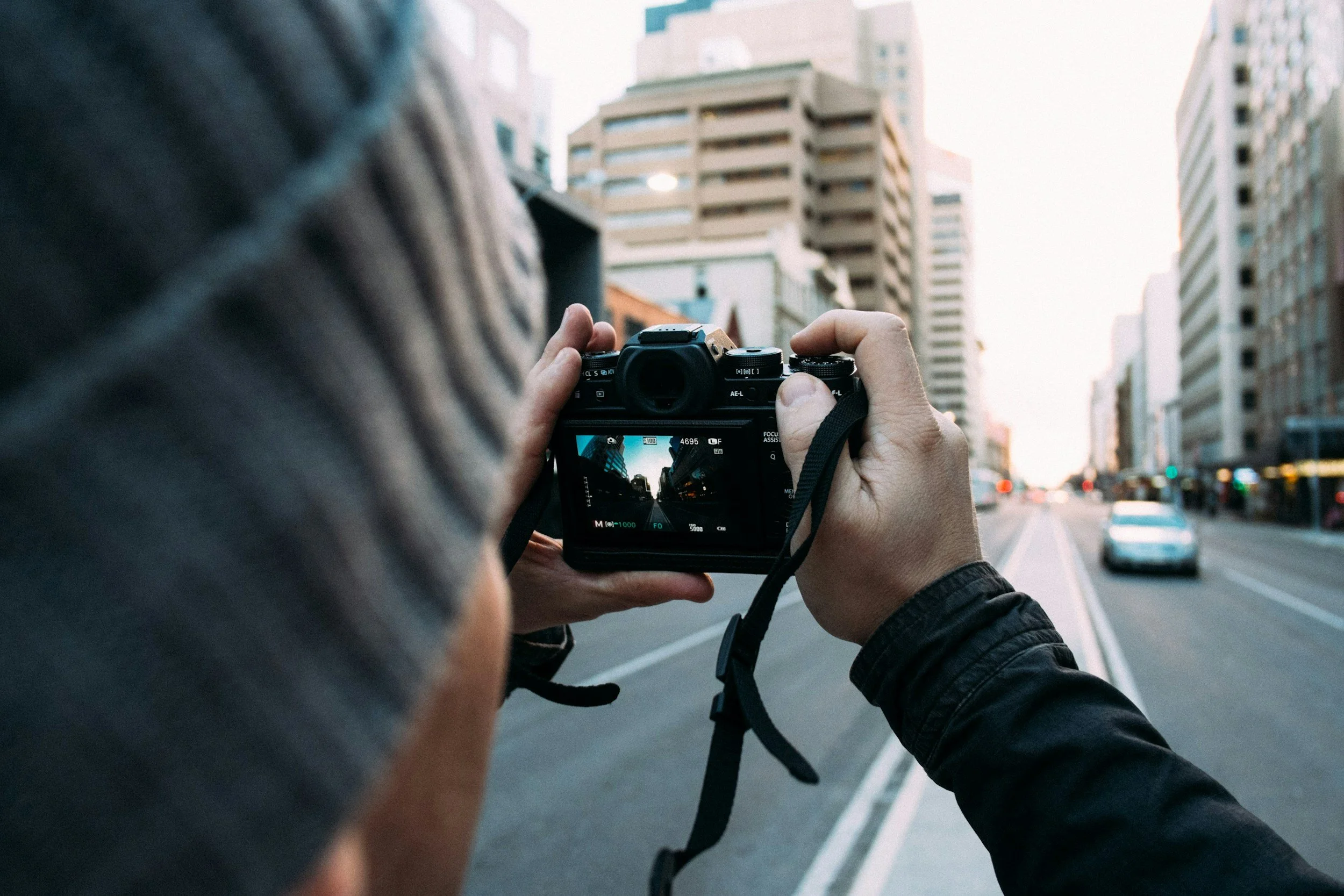
Trends are unavoidable. They are also temporary.
Using a trend does not weaken your work if it aligns with your voice. Chasing a trend weakens your work if it replaces your voice.
Ask yourself:
• Does this aesthetic serve my intent
• Or does it simply perform well online
Trends create visibility. Vision creates longevity.
Photographers who build careers are not those who react fastest, but those who remain consistent.
Exercises to Strengthen Visual Intuition

Creative vision is developed through practice, not theory.
Exercise One: One Emotion
Choose one emotion.
Photograph for one hour.
Ignore subject, location, and technique.
Only the emotional outcome matters.
Exercise Two: Constraint
Remove choice.
• One lens
• One focal length
• One location
• One colour palette
Constraint sharpens decision making.
Exercise Three: Ruthless Editing
Select ten images that feel related.
Remove anything that breaks the mood.
Ask whether each image strengthens the story.
Editing is where vision becomes visible.
From Vision to Portfolio
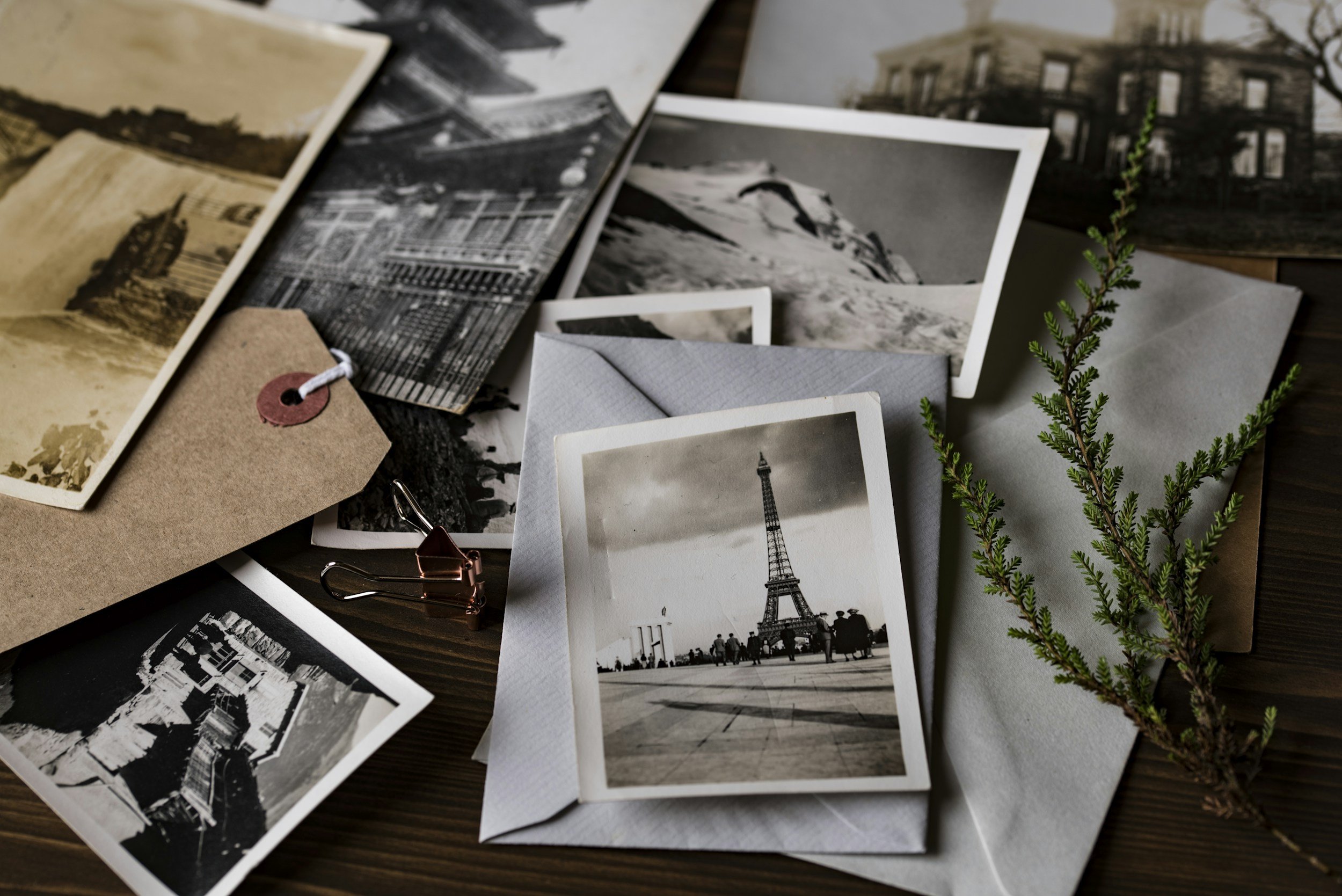
A portfolio is not a collection of your best images.
It is a distilled expression of how you see.
Fewer images with stronger cohesion will always outperform variety without intent. Each image should support the same conversation.
A strong portfolio does not say “I can do this”.
It says “This is how I see the world”.
For example, I have been shooting for 43 years and I have shot every conceivable genre of photography, however with my business I have chosen to concentrate on Signature Editorial Portrait Experiences, yet I can shoot anything!
Your portfolio also need to change and be in flux and you should rotate images.
Closing Perspective
Creative vision is not found overnight.
It is built through reflection, repetition, and restraint.
Slow down. Observe more. Edit harder.
Let your work speak with intention.
Photography becomes meaningful when technique serves vision, not the other way around.